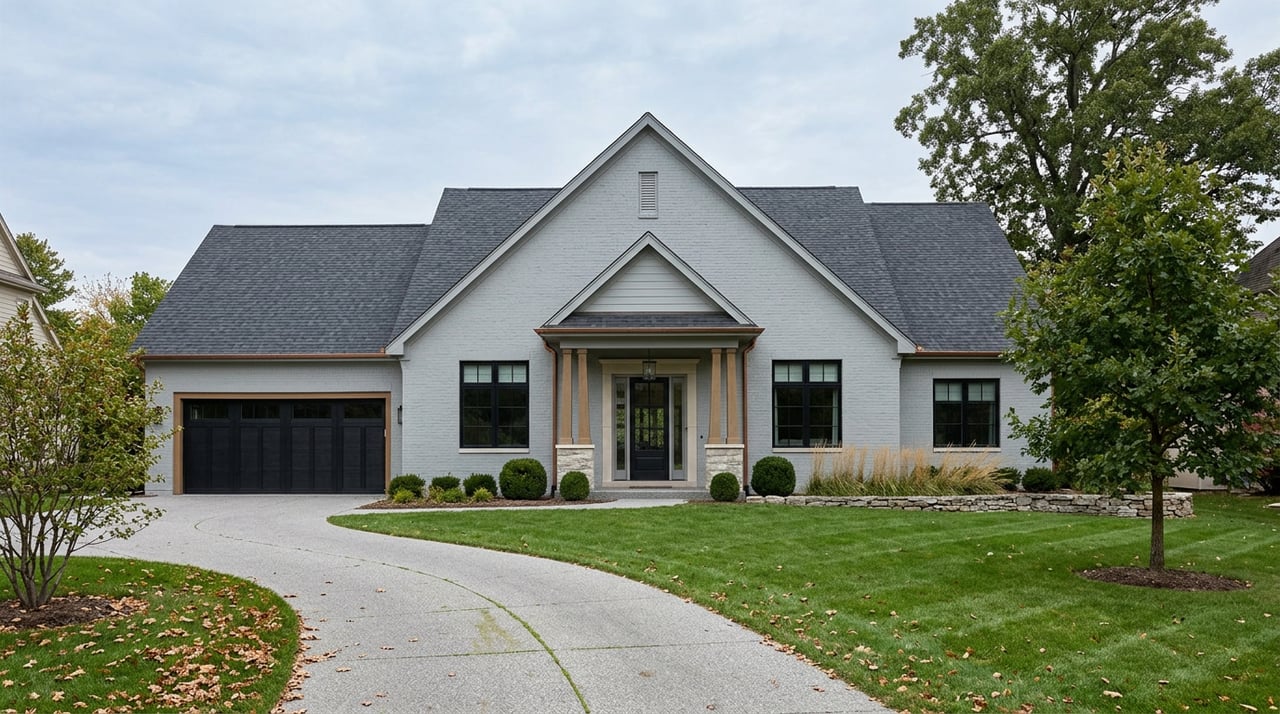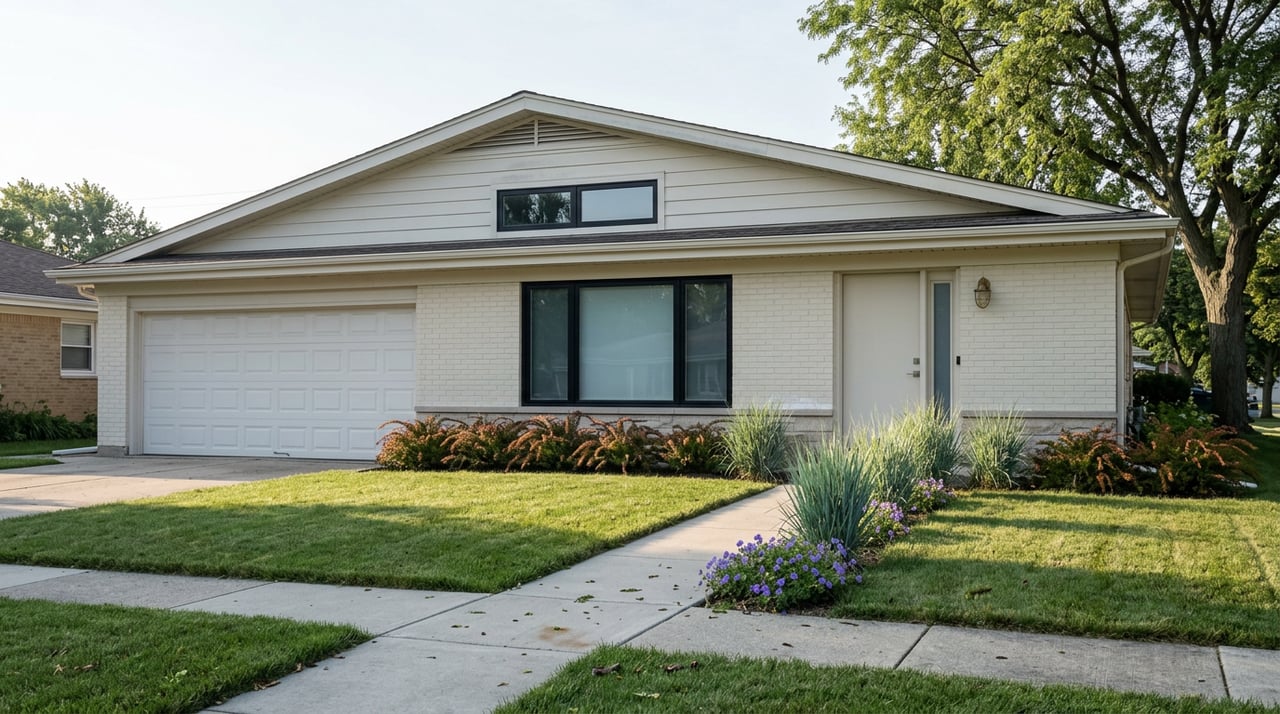
If you pulled up Wheaton's home price online this week, you'd get a single number. A median. A tidy figure that suggests the town moves as one market. It doesn't. Wheaton has two Metra stops, a physical dividing line that predates most of the housing stock, and at least one enclave where the median is almost beside the point because so few homes ever sell.
The citywide number isn't wrong. It's just an average of markets that don't behave the same way, and if you're comparing Wheaton to Glen Ellyn or Winfield based on that one figure, you're comparing an average to a specific street.
Two Train Stations Nobody Accounts For
Most suburbs along the Metra Union Pacific West Line get one stop. Wheaton gets two: the Downtown Wheaton station at 402 W. Front St. and the College Avenue station at 303 N. President St., both confirmed on Wheaton's own city transportation page. That's not a footnote. It means the "walk to the train" radius that shows up in every listing description isn't one circle on a map, it's two overlapping ones, and they don't produce the same housing market.
The Downtown Wheaton stop sits inside the restaurant and retail core. The College Avenue stop is quieter, more residential, closer to the Wheaton College campus than to Front Street's storefronts. As of the last published ridership count in 2018, Wheaton ranked as the 19th busiest of Metra's 236 non-downtown stations, averaging 1,618 weekday boardings. That figure is dated, but the underlying pattern hasn't changed: this is a heavily used stop, and heavily used stops pull housing demand toward them in a way that isn't evenly distributed across the rest of the city.
What the Median Actually Hides
Pull the numbers apart by location and the spread gets wide fast.
| Micro-market | Price signal | Window | What's actually driving it |
|---|---|---|---|
| Citywide Wheaton | $500K median list, $269 per square foot | July 2026 | Blends every subdivision, condo building, and teardown lot into one figure |
| Downtown Wheaton (walking distance to the Front Street stop) | $454,815 average home value, up 8.9% year over year | Zillow, May 2026 | Buyers pricing in the walk to the train and the restaurant row on Front Street |
| Wheaton College area | $844K median sale, up 94% year over year | Redfin, trailing three months through July 2026 | A handful of large historic homes changing hands, not a stable trend line |
| 60187 zip code overall | $515,529 average home value, up 5.5% year over year | Zillow, June 2026 | Combines the walkable core with larger lots farther from downtown |
| West Wheaton, Muirfield Circle enclave | Listings in the $1.1M to $1.4M range | Recent listing activity | Custom-built homes with direct Illinois Prairie Path access |
| West Wheaton, Roosevelt Road corridor | Condos and townhomes starting around $235K | Recent listing activity | Same neighborhood name on paper, entirely different housing stock |
Notice what's happening in that Wheaton College row. A 94% year-over-year jump sounds like a market on fire, and technically it is, but it's also a sign of how thin that pocket's trading volume actually is. When only a handful of large historic homes sell in a given stretch, one or two high-dollar closings can swing the median by enormous percentages without meaning the whole neighborhood repriced. That's a different kind of signal than the steadier 8.9% appreciation showing up in Downtown Wheaton, where more transactions are happening and the trend has more to lean on.
The West Wheaton split is the clearest illustration of the whole problem. A single neighborhood name covers both a $235,000 condo along Roosevelt Road and a $1.4 million custom home on Muirfield Circle. If someone tells you they're "looking in West Wheaton," that sentence alone tells you almost nothing about their budget or what they'll find.
Roosevelt Road Is the Line Buyers Feel, Not a Line on a Map
Wheaton's own housing stock splits largely along Roosevelt Road. North of it, you're generally in older, more walkable blocks built up gradually over decades, closer to downtown and both train stops. South of it, the pattern shifts toward newer, subdivision-style development built in a more uniform wave. This isn't a legal boundary or a school attendance line. It's a construction-era divide that happens to track closely with a major road, and it shows up in the housing stock every time you cross it.
That divide also explains why "North Wheaton" and "South Wheaton" get treated as shorthand by people who've actually shopped this market, even though neither term appears on an official map. Buyers comparing a 1920s bungalow near downtown to a 2013-built home in a newer south-side subdivision aren't comparing two flavors of the same product. They're comparing different construction eras with different maintenance profiles, different lot layouts, and different proximity to the walkable core.
The One Thing That Crosses Both Sides
The Illinois Prairie Path runs through Wheaton regardless of which side of Roosevelt Road you land on, and it's the rare amenity that adds value on both sides of that split. It's part of why a South Wheaton lot backing to the path can command attention despite being farther from downtown, and part of why Muirfield Circle's custom homes justify their price point even though they sit outside the immediate walkable core.
A Prairie Path connection doesn't erase the Roosevelt Road divide. It's closer to an exception clause. If a listing description mentions direct trail access, that's worth weighing against the general pattern rather than assuming the neighborhood label alone tells the full story.
Why Downtown Doesn't Look Like Anywhere Else in Wheaton
The Downtown Wheaton core isn't just closer to the train. It's also deliberately shaped by an organization built to keep it distinct. The Downtown Wheaton Association describes the district as home to more than 200 locally-owned businesses and over 50 restaurants, positioned as an alternative to "a big box store or online retailer." That's not incidental to the price data. A downtown that's actively curated to stay independent-business-heavy tends to hold its character over time in a way that shopping corridors anchored by national chains don't, and buyers paying a premium to walk to Front Street are paying for that character as much as for the train schedule.
What This Means If You're Actually Buying or Selling Here
If you're comparing Wheaton to a neighboring suburb using one median number, you're likely comparing an average to a specific address. Ask which side of Roosevelt Road and which Metra stop a listing sits nearest to before you draw conclusions from price alone.
If you're chasing a specific appreciation rate, understand the difference between a steady trend built on real transaction volume, like Downtown Wheaton's, and a thin-sample swing like the Wheaton College area's. Both are real numbers. They don't mean the same thing.
If you're pricing a home for sale, the comps that matter are the ones from your actual micro-market, not the citywide figure. A home five blocks north of Roosevelt Road and a home five blocks south of it are not competing for the same buyer pool even if they're both technically "in Wheaton."
If Prairie Path access is part of your search, treat it as a standalone value driver rather than folding it into whatever neighborhood label the listing uses.
A Few Questions Worth Asking Before You Search
Does Wheaton really have two separate Metra stops? Yes. The Downtown Wheaton station at 402 W. Front St. and the College Avenue station at 303 N. President St. are both active stops on the Union Pacific West Line, and they anchor different parts of the housing market.
Is North Wheaton always more expensive than South Wheaton? Not automatically. The pattern holds more often than not because of the age and walkability of the housing stock north of Roosevelt Road, but specific streets, lot sizes, and trail access can shift an individual property well outside that general trend.
Does being near the Prairie Path guarantee a price premium? It tends to add value on either side of Roosevelt Road, but it's one factor among several, not a substitute for looking at the actual comps for that specific block.
Wheaton's price data rewards a close look more than most suburbs its size, precisely because the citywide number hides so much variation underneath it. If you're weighing a move here, or trying to price a home you already own, the conversation worth having isn't about the median. It's about which few blocks your specific address actually competes against.
If you want that comparison run against your own address or a shortlist you're considering, The Lance Kammes Team can walk through it with you. Get a Free Home Valuation and see where your property actually sits inside Wheaton's real market, not just its average one.